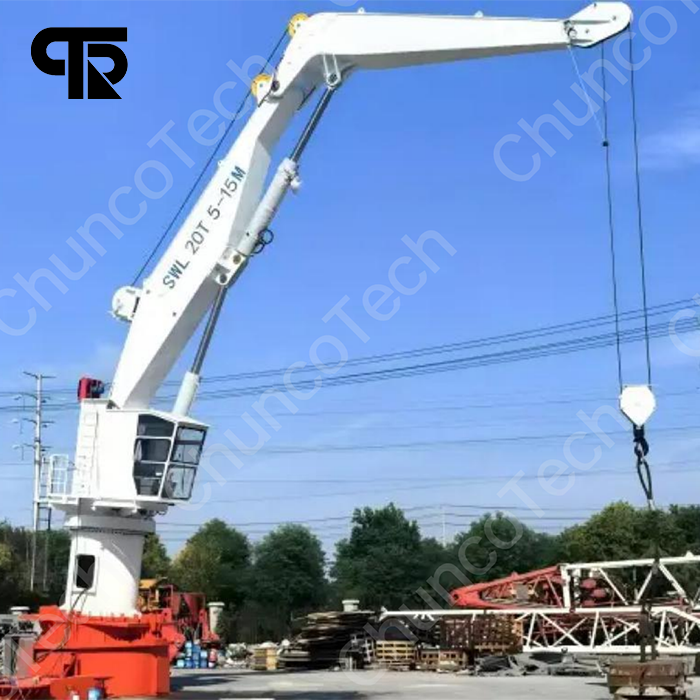
Selecting a hoisting apparatus, the choice often focuses on articulated boom versus extendable boom. Rigid lifts deliver effortlessness and are ideal for direct lifts, but segmented lifts provide increased maneuverability, granting access to confined spaces. Consider the location; if you’re largely facing limitations or call for more complicated positioning, a segment crane is expectedly the leading option. However, for open areas and standard lifts, a rigid hoist might act as a enhanced thrifty resolution.
Familiarizing with Stiff Jib Machines: Functions and Gains
Heavy-Duty jib machines represent a unique type of raising equipment, intended for significant load management in challenging locations. Their main feature is a rigid boom fabrication, which supports for specific positioning and refined poise, especially when executing in cramped spaces or at major heights. Common purposes encompass bridge building, industrial campaigns, breeze plantation deployment, and civic progress. The key positive aspects consist of increased precaution, improved productivity, and the ability to accomplish tasks that may be infeasible with typical installations. This converts to minimized expenses and refined plan effects.
STS Jibs: The Behemoths of Port Container Logistics
Current enormous STS cranes represent the max of engineering feat in the maritime industry. Designed to promptly load and offload containers between vessels and the pier, they are crucial for the continuous operation of modern docks. Their stature – often exceeding a hundredfold length units – and incredible bearing power allow them to handle the most substantial container freighters currently in deployment, fundamentally guiding global market.
Knuckle Boom Cranes: Flexibility in Loading Activities
Folding machines are distinguished for their exceptional adaptability, providing technicians with a special advantage in variegated raising chores. Possessing a curving boom part, these mighty machines can cover around impediments and deposit loads in narrow localities. This characteristic makes them appropriate for uses in assembly, logistics, services endeavors, and numerous other domains. Conclusively, knuckle boom devices offer a noteworthy method to difficult transporting criteria.
Straight Boom Cranes: Correctness and Firmness Outlined
Constant jib lifters are distinguished for their remarkable capability to deliver spot-on lifting and installation of materials. In contrast to collapsible models, their easy design leads to fundamental robustness, making them advantageous for applications requiring substantial amounts of guidance and scant sway. This trait is notably paramount in assembly sites and categories where exacting tolerances are necessary.
Rigid Crane Apparatus Advantages: Once Hardness Is Necessary
Usual craning arm lifters often face challenges with flex, especially when lifting bulky objects or working at considerable distances. Yet, unyielding crane arm machines grant a marked upper hand by decreasing undesirable oscillation. This greater control results to more secure procedures, increased precision, and a mitigated danger of item imbalance. Accordingly, firm devices are suited for tasks where structural resilience is important.
Jetty Cranes: Certain Insightful Study into STS Mechanisms
One dockside lifter infrastructure represents certain key component within modern cargo docks. Sophisticated ship-to-shore machines are complex components created to effectively unload packages out of large shipborne liners at shore-based conveyance. Its own operation demands exactness engineering and sophisticated technology to ensure welfare and improve flow.
Contrasting Crane Models: Articulating, Fixed, Rigid, and STS
Opting for the ideal loader for a certain function is important. While many diversities exist, four typical types – pivoting cranes, straight cranes, heavy-duty cranes, and STS cranes – illustrate significantly different traits. Knuckle cranes grant extra maneuverability due to their jointed division, making them well-suited for cramped areas. Extendable cranes provide multifunctional distance through their retractable component, perfect for extensive raising demands. Strong cranes maintain a erect component, ideal for correct installations where steadiness is vital. Finally, Jetty cranes, designated for freight hauling at ports, include huge elevating power and far-reaching spread.
- Folding Handler Types
- Boom Loader Styles
- Stiff Lifting Models
- Portside Machine Types
An Growth With respect to STS Cranes: Trends and Improvements
Across recent epochs, STS (Ship-to-Shore) crane mechanisms has undergone a significant evolution, spurred by requirements for augmented port effectiveness. Early STS cranes were partially simple systems, utilizing basic lifting mechanisms. Now, today's STS cranes include sophisticated control, including high-tech control systems, smart positioning capacities, and upgraded safety precautions. A key emergence is the embedding of electronically powered propulsion, reducing emissions and improving operational sustainability. Additionally, the rise towards automated operation and predictive maintenance are reshaping the landscape concerned with STS crane control. The vision sees sustained priority on fuel management and the creation of even larger cranes to adjust to constantly bigger container boats.
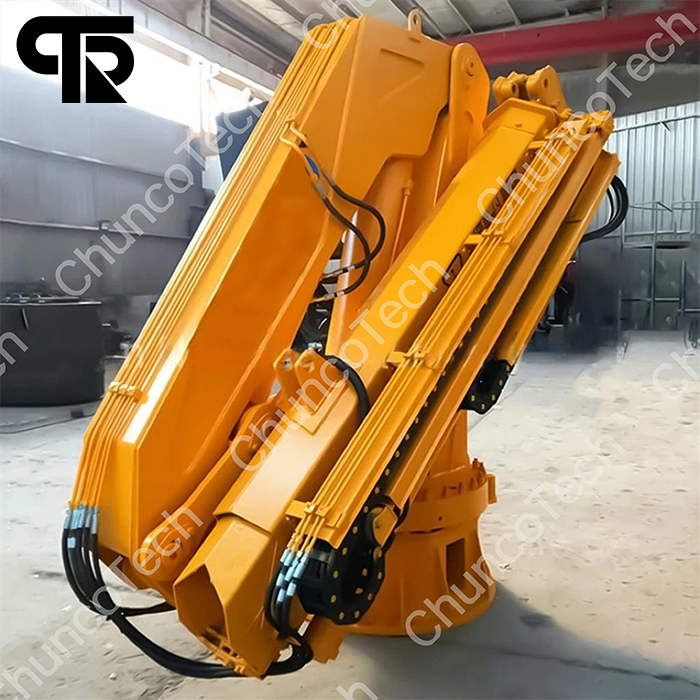 Knuckle Boom Crane