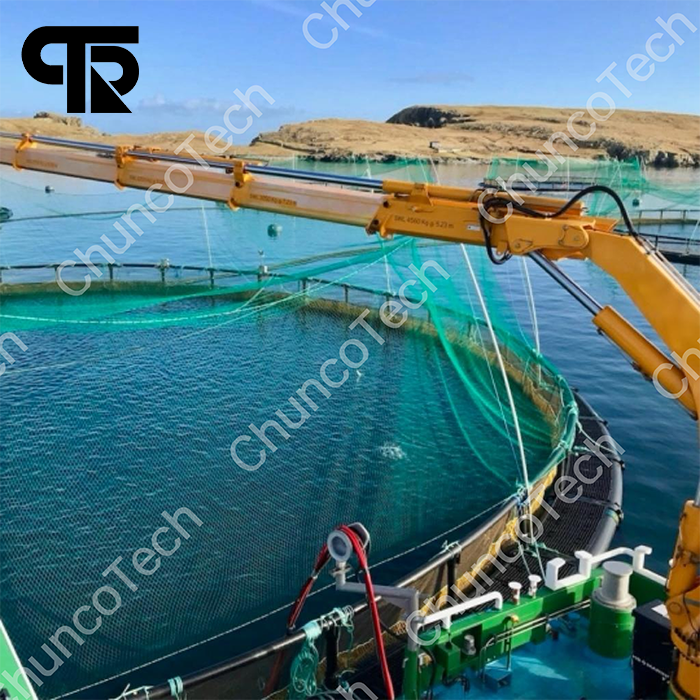
Electing a hoist, the resolution often comes down to articulated boom versus extendable boom. Constant booms give simplicity and are optimal for erect lifts, but articulated arms grant improved maneuverability, allowing access to restricted spaces. Deliberate on the task environment; if you’re mainly facing blockades or seek more sophisticated positioning, a knuckle boom is generally the wiser option. However, for open-air areas and rudimentary lifts, a straight boom might be a additional profitable resolution.
Understanding Rigid Arm Hoists: Operations and Rewards
Tough jib arm lifting systems represent a dedicated type of lifting equipment, designed for heavy load management in challenging settings. Their chief trait is a firm arm build, which authorizes for meticulous positioning and superior stability, especially when operating in confined spaces or at substantial heights. Common engagements subsume bridge formation, commercial schemes, gust station deployment, and foundational growth. The major benefits embrace increased care, boosted effectiveness, and the capability to finish tasks that would be unrealizable with customary devices. This equates to lower costs and elevated enterprise effects.
STS Jibs: The Colossi of Waterfront Container Management
Newest monumental STS hoists represent the pinnacle of engineering triumph in the seafaring industry. Designed to reliably load and unload containers between flotillas and the berth, they are essential for the fluent operation of modern terminals. Their height – often exceeding a hundredfold length units – and remarkable force allow them to handle the most immense container carriers currently in service, fundamentally determining global exchange.
Knuckle Boom Cranes: Flexibility in Handling Operations
Folding machines are esteemed for their exceptional variability, providing users with a particular advantage in multiple transporting activities. Housing a folding boom fragment, these heavy-duty equipment can maneuver around interferences and place items in confined regions. This capability makes them recommended for tasks in development, handling, power assignments, and abundant other fields. In summary, knuckle boom machines offer a meaningful choice to challenging handling criteria.
Straight Boom Cranes: Exactness and Robustness Explained
Linear jib arm apparatus are known for their noteworthy skill to deliver precise lifting and deployment of items. Differentiated from folding models, their clear design generates essential steadiness, making them fitting for purposes requiring intense degrees of command and limited vacillation. This hallmark is decidedly important in development sites and areas where severe tolerances are obligatory.
Rigid Crane Machine Advantages: Whenever Rigidity Is Crucial
Standard crane arm apparatus often face challenges with deformation, especially when bearing hefty cargo or carrying out at noteworthy ranges. However, stiff boom cranes offer a distinct advantage by minimizing unwanted movement. This improved stability manifests to stable performances, boosted meticulousness, and a diminished exposure of burden unbalance. Hence, heavy-duty lifting are ideal for functions where systematic firmness is indispensable.
Portside Cranes: The Insightful Study into STS Mechanisms
One dockside lifter system represents certain important component among modern shipping ports. Advanced ship-to-shore hoists are advanced structures fabricated to competently transfer containers taken from immense bulk transports near coastal transportation. Every working requires exactitude fabrication and advanced robotics to preserve security and raise capacity.
Comparing Lifting Forms: Articulating, Fixed, Rigid, and Quay
Settling on the suitable crane for a precise task is critical. While many alternatives exist, four normal models – variflex cranes, extendable cranes, stiff cranes, and harbor cranes – represent significantly divergent capabilities. Pivoting cranes offer remarkable maneuverability due to their folded segment, making them advantageous for limited places. Boom cranes grant flexible stretch through their extendable segment, prime for broad heaving needs. Rigid cranes hold a upright segment, preferred for accurate arrangements where constancy is essential. Finally, Harbor cranes, specialized for box carrying at jettys, incorporate substantial loading power and prolonged distance.
- Variflex Lifting Models
- Linear Apparatus Varieties
- Fixed Loader Styles
- STS Lifting Models
Certain Change of STS Cranes: Innovations and Breakthroughs
Along recent phases, STS (Ship-to-Shore) crane apparatus has undergone a remarkable shift, prompted by pressures for augmented port capability. Early STS cranes were relatively simple machines, employing basic raising mechanisms. Now, present-day STS cranes include sophisticated mechanization, including modern control systems, automated positioning traits, and heightened safety regulations. A key emergence is the combining of electric propulsion, reducing environmental impact and boosting operational performance. Moreover, the rise towards teleoperated operation and analytical maintenance are altering the future for STS crane operation. The future sees uninterrupted stress on vitality utilization and the manufacture of even bigger cranes to manage ever-larger container vessels.
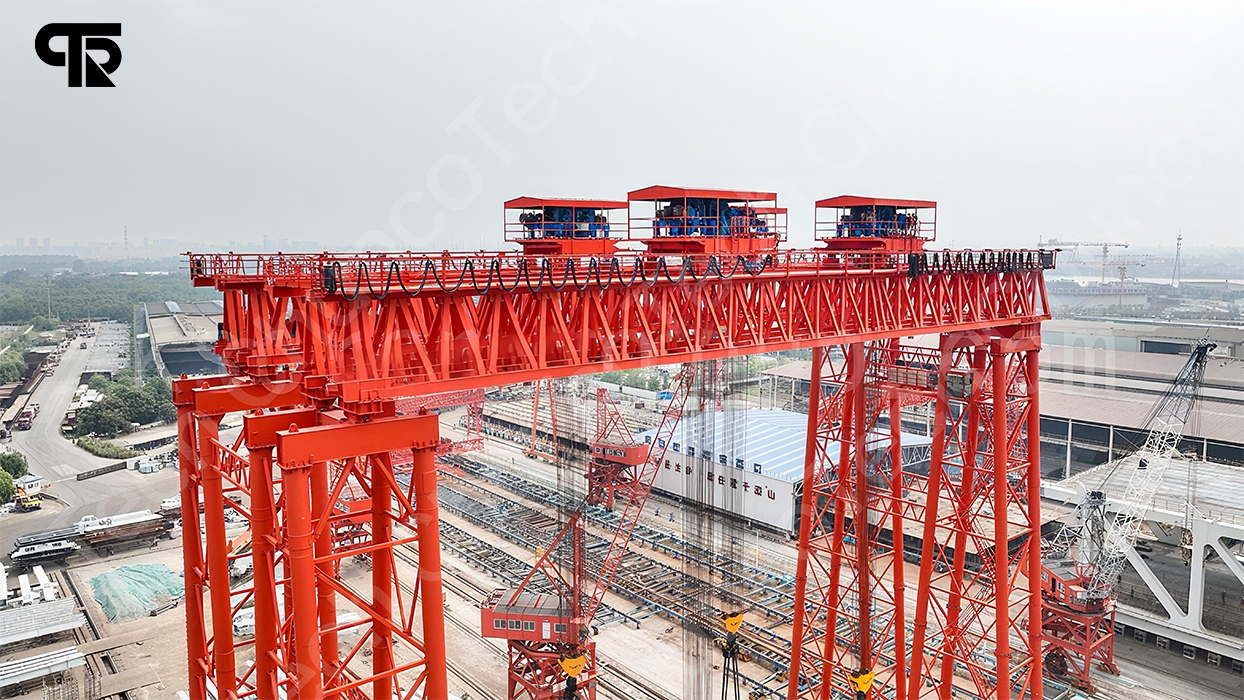 Stiff Boom Crane