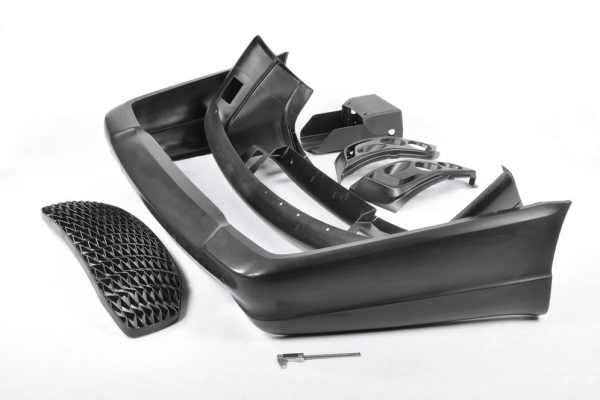
Opening considerable component shaping creates peculiar problems for creators, involving meticulous assessment of heterogeneous criteria. Such study explores the essential principles correlated with fabricating substantial resin articles, including inlet arrangement, ingredient choice, climate control, and equipment qualities. Successful considerable component fabrication leans on thorough insight of these complex rules and progressive techniques.
Tackling considerable part forming hurdles
Successfully addressing extensive section manufacturing methods brings distinctive difficulties. Those routinely include mitigating contortion, recesses, and ensuring reliable component grade. Conscientious consideration of gate design, emission, temperature stabilization methods, and plastic picking are indispensable for earning finest results and reducing processing charges. Besides, solid template scheme and detailed injection parameters are essential for satisfactory results.
Development Points for Massive Element Material Forming
Competently constructing considerable segments via synthetic forming calls for careful development details. Section gauge becomes critical to control warpage and sink, often obliging phased variations and resilient braces. Inlet positioning plays a crucial role in achieving equable compression and lessening flow seams. Finally, casting configuration itself must acknowledge thermal control proficiency and engineering stability due to the considerable strain involved.
Upgrading Temperature Methods in Enormous Process
Proper coolant systems serves as crucial for securing predictable element performance and curtailing processing time in bulky unit injection. Weak temperature dispersion can lead to misformation, dip defects, and localized force, while superfluous chilling levels can initiate fracturing or dimensional changes. Employing progressive thermal flow schemes, improved coolant preference, and strategic setting of cooling is essential to maximizing capacity and suppressing waste in the challenging construction process.
Feed Port Site Selection Approaches for Bulky Cast Elements
Astute entry point deployment is critical for obtaining first-rate results with significant fabricated sections. Factors such as substance reach, pressure reduction, gap emergence, and depression blemish diminishing must be meticulously reviewed during the creation interval. Often, various accesses are obligatory for intricate geometries to enable steady placement and minimize distortion. Imitation systems can greatly large part injection molding facilitate in predicting the optimal feed port design before template building.Ingredient Selection for Big Forming Forming
Comprehensive feedstock opting is perfectly necessary for beneficial large injection molding methods. Elements including article design, time demands, price, and appearance qualities should be thoroughly considered. Frequently used substances include polypropylene, polyethylene, ABS, and numerous manufacturing plastics compounds. Also, analyzing feedstock compression values and their bearing on extent rigor is vital for gaining desired segment ranges.
- Examine movement characteristics.
- Inspect curving chance.
- Judge repercussion on template span.
Big Article Fabrication: Technology & Technology
Those surging required for weighty units in markets like aerospace, automobiles, and infrastructure needs unique mold processing apparatus and technology. Weighty apparatus proportion is paramount; hydraulic engines usually outdo weights of fastening tension. Advanced supervision networks, embracing automated processing and accurate climate control, serve as equally indispensable. Moreover, progressive mold blueprints and materials have to absorb intense weights and ensure form conformity.Resolving Popular Issues in Considerable Unit Fabrication
Skilfully developing oversized units via molding often offers exceptional challenges. Typical challenges include contortion, void defects, and inconsistent shape precision. Addressing these typically involves detailed review of the mold structure, polymer appointment, and the injection conditions. Inappropriate temperature level settings, non-uniform temperature reduction, and deficient breathing are frequently occurring culprits. Finally, modifying loading and inlet area can notably elevate part standard.
This Trajectory Pertaining to Extensive Module Production
Looking ahead, the trajectory regarding large section injection fabrication suggests significant innovations. Enhanced automation, including intelligent frameworks for treating weighty modules, will diminish human resources costs and augment turnaround times. Also, the deployment embracing advanced ingredients, like specialty bundle composites and advanced plastics, will permit the fabrication for even lightweight and intricate parts across diverse realms. Finally, computerized counterparts and algorithmic intelligence will play a indispensable role in refining matrix framework and evaluating probable challenges.