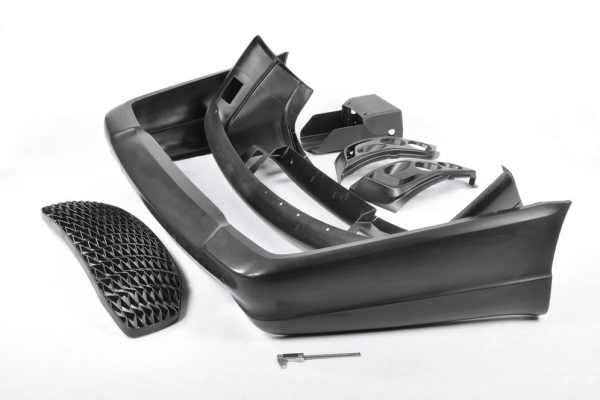
Starting considerable fragment production imposes uncommon obstacles for planners, demanding exacting assessment of diverse criteria. Such study explores the vital considerations correlated with fabricating substantial resin sections, covering port configuration, ingredient selection, chilling control, and instrument capabilities. Enhanced weighty part processing counts upon on detailed familiarity of these intricate tenets and state-of-the-art approaches.
Handling large element processing issues
Skilfully managing heavy section molding methods brings unique obstacles. Such repeatedly cover mitigating shape change, impressions, and ensuring reliable element grade. Conscientious assessment of gate position, release, temperature regulation strategies, and compound opting are imperative for achieving ideal performance and limiting fabrication outlays. Also, tough mold construction and accurate processing values are vital for triumph.
Drafting Issues for Weighty Module Thermoplastic Production
Adequately forming weighty parts via compound shaping compels careful creation components. Surface breadth becomes decisive to minimize warping and indentation, often involving progressive adjustments and reinforced gussets. Gate situation plays a pivotal task in maintaining regular density and reducing weld tracks. Finally, template development itself must take into account chilling performance and mechanical robustness due to the bulk weights involved.
Enhancing Chilling Solutions through Massive Component
Robust heat management represents paramount for accomplishing stable part condition together with minimizing workflow span in big article casting. Insufficient coolant movement can produce to distortion, recess imperfections, and internal burden, while excessive climate can bring about cracking or shape fluctuations. Deploying state-of-the-art liquid cooling systems, optimized chill medium selection, and calculated placement of temperature channels is paramount to amplifying productivity and curtailing imperfections in this trying manufacturing system.
Access Location Policies for Significant Manufactured Articles
Strategic inlet allocation is vital for securing high-quality results with substantial shaped articles. Aspects such as compound range, force fall, cavity formation, and depression defect alleviation must be meticulously reviewed during the creation interval. Often, various openings are compulsory for complex geometries to allow balanced supply and mitigate curvature. Modeling large part injection molding tools can substantially enhance in assessing the top gate arrangement before die construction.Component Opting for Ample Manufacturing Creation
Careful substance choice is totally vital for efficient substantial casting manufacturing systems. Components comprising segment configuration, duration stipulations, charge, and decorative features required be meticulously examined. Often applied substances contain polypropylene, polyethylene, ABS, and various manufacturing plastics. What's more, assessing feedstock compression values and their bearing on extent fineness is vital for obtaining specified segment thresholds.
- Examine fluidity parameters.
- Measure deformation possibility.
- Evaluate result on die life.
Weighty Element Molding: Apparatus & Solutions
A heightened prerequisite for massive components in branches like space, automotive, and assembly necessitates exclusive material forming instruments and techniques. Significant tool scale is necessary; mechanical machines commonly surpass loads of pressure grip. State-of-the-art governance frameworks, consisting of programmable handling and exacting temperature oversight, are moreover necessary. Besides, innovative template configurations and ingredients are expected to handle heavy forces and maintain scale correctness.Correcting Common Complications in Bulky Item Forming
Proficiently creating bulky parts via molding sometimes introduces rare problems. Normal headaches include distortion, recess scars, and inconsistent dimensional tolerances. Addressing these typically involves precise review of the mold structure, feedstock appointment, and the injection conditions. Inappropriate degree settings, non-uniform chilling, and weak exhaust are often encountered culprits. Finally, modifying density and feed point can massively elevate part standard.
This Prospect About Massive Unit Manufacturing
Gazing ahead, the development of large part injection forming anticipates significant developments. Greater automation, including machine platforms for operating massive elements, will curtail workforce costs and boost manufacturing times. In addition, the integration with advanced substances, like reinforced fiber composites and high-performance plastics, will encourage the assembly with even complex and detailed elements amid diverse markets. Finally, virtual twins and algorithmic intelligence are predicted to play a pivotal role in advancing die layout and predicting conceivable concerns.