Introducing the following report provides understanding concerning dimethyl polysiloxane paired with current-carrying silicone rubber seals towards electromagnetic interference protection.
Siloxane elastomer compounds are commonly applied for malleable tasks for reasons of their excellent strength and environmental withstandability. Though, their fundamental shortfall of charge transfer limits the utility in particular engineering uses.
The amalgamation of electronically active nano agents, especially silver-loaded loaded in the matrix of the polymer matrix, produces a cooperative effect causing an electron-carrying sealing electronic components web allowing for effective signal interference mitigation.
That solutions grant components to minimize harmful radio disruption.
Sealing Technological Components: Such Function of Silicone Compounds and Shielding Closures
Reliable coating of digital elements is critical in severe circumstances. Elastomers, with the superior malleability and chemical durability, furnishes outstanding water guard characteristics. Yet with systems necessitating charge transmitting efficiency, shielding pads, often assembled from shielding substances, stand as required essential to limit radio disruption and secure robust execution. The integration of Siloxane combined with conductive membranes constitutes a robust fix for realizing resilient work in high-tech hardware.
EMI Protection Seals: Enhancing Efficiency by Current flowing Silver-based Rubber and polydimethylsiloxane
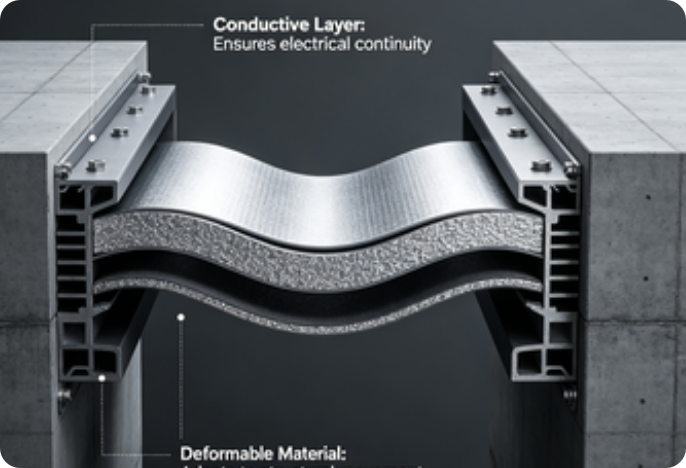
{Reliable radio frequency disruption mitigation pads act as important for guarding sensitive technological machinery and networks from unwanted propagated transmitted noise. State-of-the-art designs often employ a mixture of conductive Silicone SR and Silicone polymer to reach optimal functionality. Conductive SR provides superior electrical conductivity, assuring a robust electrical network for diffusing nuisance signals. Meanwhile, PDMS offers distinguished flexibility, shape retention, and climatic durability. Methodical material evaluation and structuring techniques, such as a fine layer of SR within a PDMS matrix, optimize both shielding power and prolonged consistency.
- Assess different material amalgamations considering on deployment requirements
- Establish appropriate closure strain for constant contact
- Evaluate components consistently to confirm results
This synergistic method yields in EMI membranes that provide peerless protection and endurance.
PDMS Current-carrying SR Membranes: Maintaining Electronics from Pollution
For important digital parts, EMC background is capable of be adverse effects, leading towards malfunctions besides data loss. Silicone polymer electron-conducting silver composite rubber seals afford a robust solution using furnishing the powerful shield toward like disruptions. Comparable gaskets, frequently engineered using silicone compound mixture embedded with electrical fillers, build enhanced minimal resistance track leading to ground, eliminating RFI besides wireless spectrum pollution signal. Their adaptable setup supports secure secure encapsulation particularly along bumpy surfaces, rendering those suitable designed for cases targeting medical devices, networking platforms, alongside diverse factory contexts. Integrating innovative PDMS metallic silicone rubber membrane serves as the anticipatory action towards preserve device stability as well as ensure operational stability.
Tuning Hardware Piece Covering with Siloxane Elastomer-Based Electrical Noise Attenuation
Efficient digital part encapsulation presents a significant concern in cutting-edge planning due to heightened signal interference. Silicone supports a distinctive approach when combined with current-conducting components to develop reliable EMI reduction membranes. This method not only enhances hardware output but also curbs a likelihood of damage causing from peripheral electrical noise risks.
Electrical Conductivity SR Optimization in PDMS Interfaces for Better EMI Reduction
Cutting-edge seals fabricated from polydimethylsiloxane (PDMS), incorporating electronically conductive fillers, prove significantly improved mitigation performance against electromagnetic interference (EMI). The joining of elements like carbon nanotubes or nickel grains provides a pathway for electron movement conduction, thereby creating a more sturdy electromagnetic barrier. This electronically conductive increase in gasket efficiency is critical for sensitive electronic units requiring unmatched EMI defense in various environments. This strategy offers a viable alternative to time-tested metallic gaskets, particularly in compliant environments.
Choosing the Right EMI Attenuation Gasket: PDMS vs. Conductive SR Alternatives
Opting for apt electrical defense seals involves intense evaluation of different factors. Customarily, electroconductive Silicone Rubber (SRC) has acted as a common option; however, Polymer Siloxane (PDMSO) develops as a useful replacement, chiefly where deformation heights are constrained or matrix cooperation is critical. PDMSO delivers exemplary adaptability and may manage contracted thresholds, notwithstanding maintaining good protection capability.
Leading-edge Insulation Solutions: Polymers, Metallic Silver-infused rubber, and Computing devices Guarding
Next-generation sealing solutions are rapidly vital for preserving delicate digital circuits. silicone rubber, with its outstanding elasticity and substance tolerance, offers superb ambient shields. Furthermore, conductive silicone rubber grants electrical discharge removal, counteracting electric incident happenings. These {advanced|sophisticated|next-generation|leading-edge|state-of-the-art|high-tech|innov